Can the Polygraph Detect Lies of Omission?
The polygraph, commonly known as the 'lie detector', has been a key tool in a variety of contexts, from judicial proceedings to security assessments. But a fundamental question arises: is it capable of identifying lies of omission? This article breaks down the polygraph's ability to meet this specific challenge.
How does the Polygraph work?
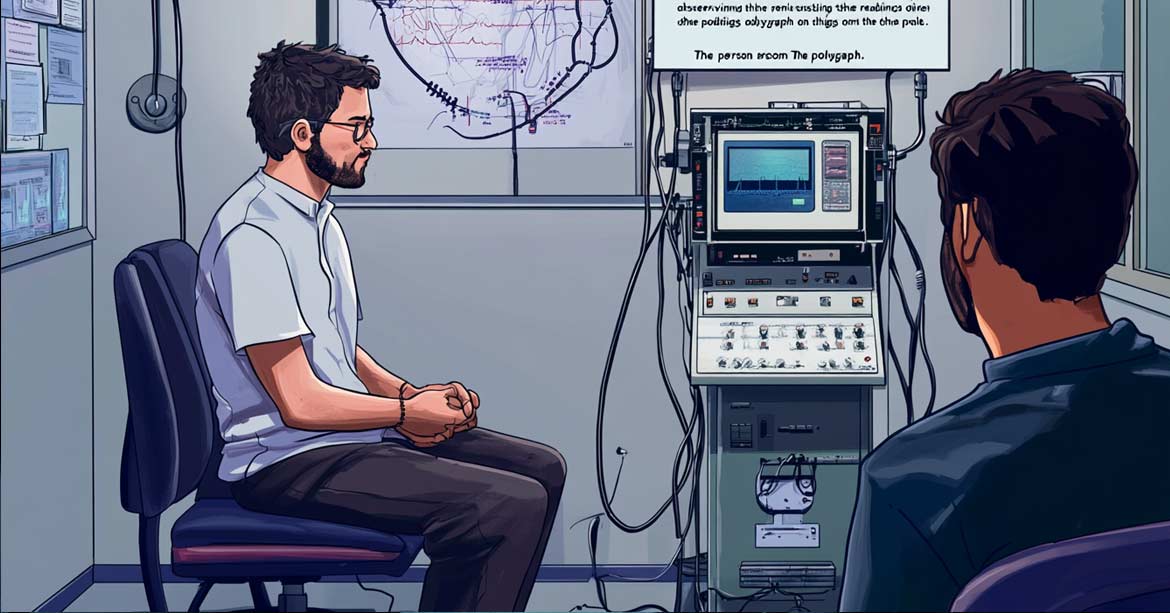
Before getting into the subject, it is essential to understand how the polygraph works. This device monitors and records physiological variables such as heart rate, blood pressure, skin perspiration and respiration. The premise is that these indicators change in response to lying or stress, which, in theory, would make it easier to detect falsehoods.
However, the polygraph has no ability to read minds or discern intentions, and is limited to interpreting physical changes to infer possible deception. This intrinsic characteristic of the device calls into question its effectiveness in detecting lies by omission.
The Lies of Omission Challenge
Lies of omission involve withholding key information, resulting in a partial or distorted understanding of reality. That is why a qualified examiner frames direct, specific questions: when they are well designed, what is left unsaid comes to light too.
Studies and Effectiveness
The polygraph's validated techniques reach an accuracy of 85-90% according to the American Polygraph Association. Its reliability rests on two factors that are actually controlled: the examiner's expertise and a rigorous protocol.
Legal and Ethical Considerations
The use of the polygraph also raises legal and ethical debates, especially regarding its admissibility as evidence in court proceedings. Legal restrictions vary from jurisdiction to jurisdiction, but the reliability of the polygraph as hard evidence is still questioned in many contexts.
Conclusion
With well-designed questions and an expert examiner, the polygraph is highly effective against lies of omission too. It provides an objective reading of the body's reactions that no intuition can match, turning doubt into clear information to act on.
Explore More about the Polygraph
For those interested in further information on the polygraph and its applications, we recommend that you consult specialised resources such as "The polygraph testThe "Frequently Asked Questions" (FAQ) can also be helpful in clarifying doubts. Frequently asked questions (FAQ) can also help to clarify doubts.
In the search for truth, it is essential to assess truthfulness and consider various tools before making decisions based on lie detection. Truth is an essential pillar in many spheres, and its pursuit must be meticulous and considered.